„Hot“ Machines - Deckel FP1, Hardinge HLVH and a very special Gorton Lathe – Machining radioactive materials
Released 17.07.2026
Last Revision 17.07.2026
An often overlooked part of machining is the manufacturing of components out of radioactive materials – Besides the general problem of those materials (Like Uranium or Plutionium) beeing radioactive and poisonous, their metallurgic properties appear to be problematic at best.
Not much picture sources on these setups and machines are availible, I tried to condense some of them in this article.
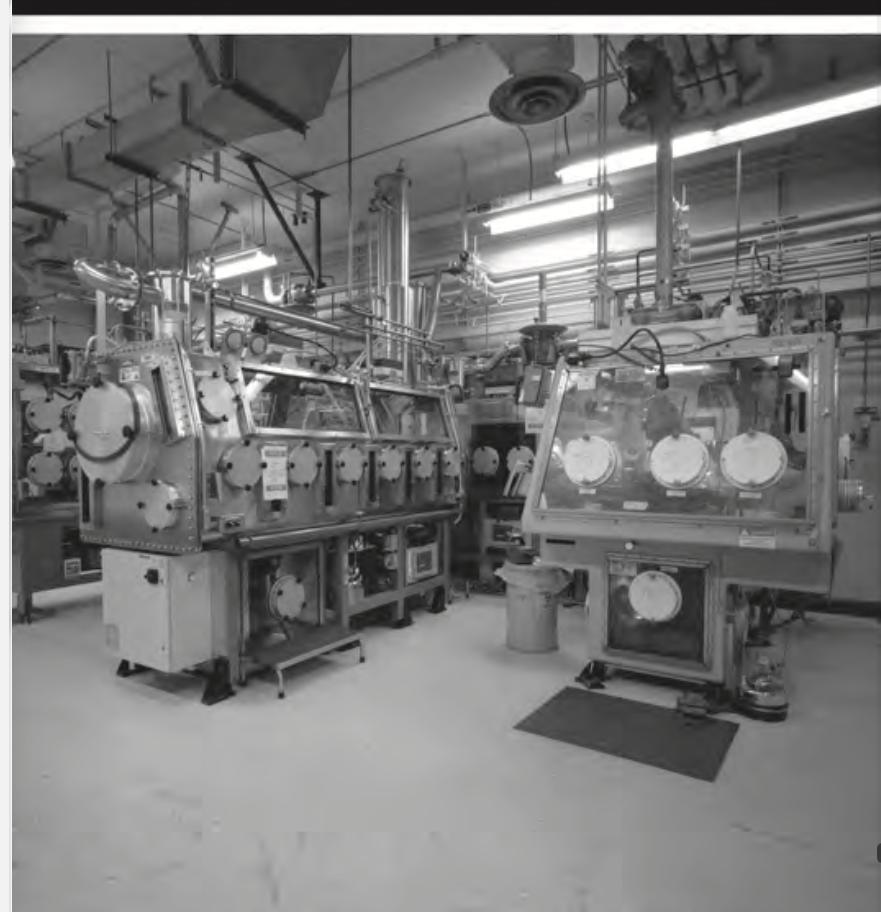
Glovebox machines at Lawrence Livermore National Laboratory
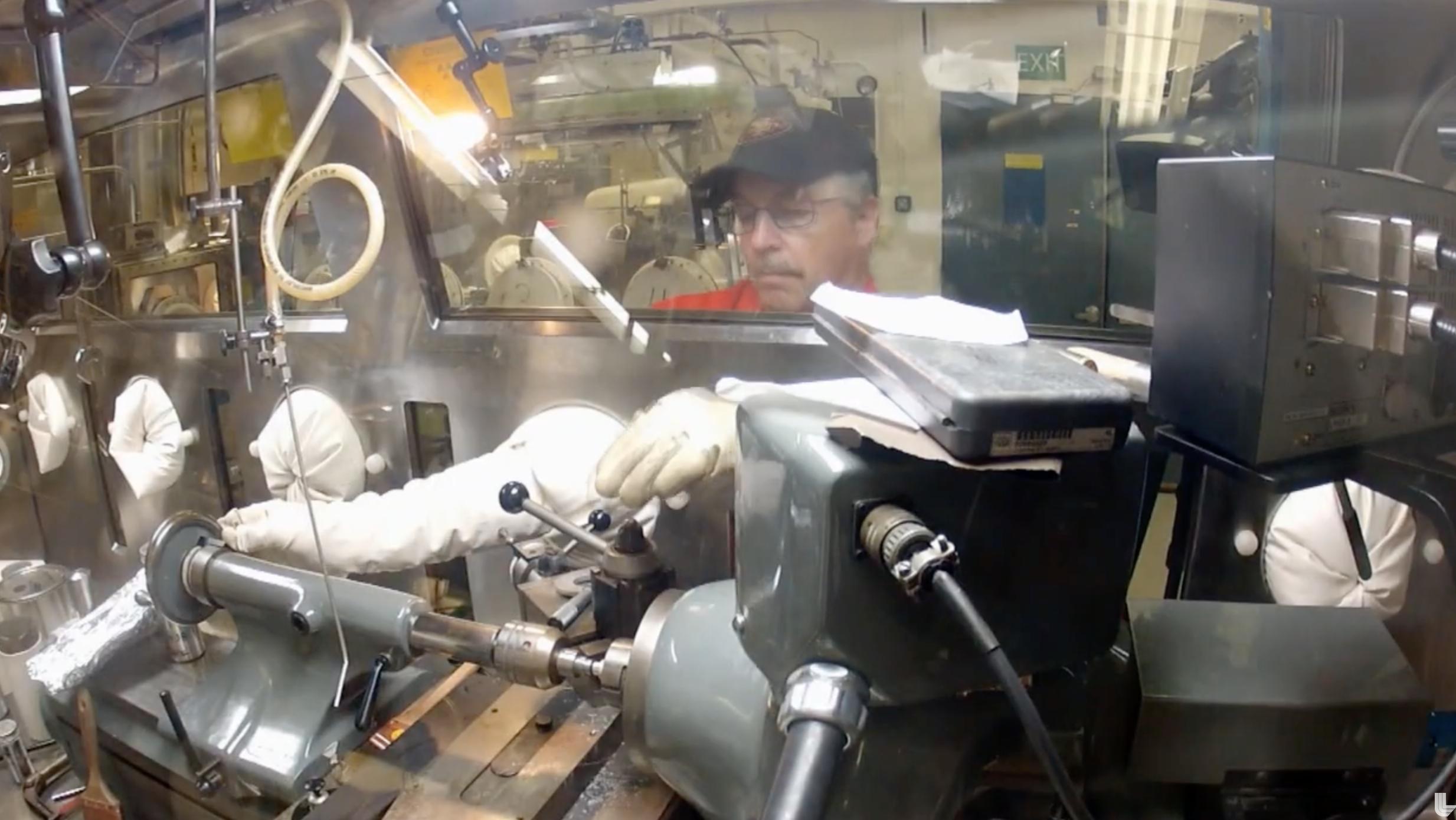
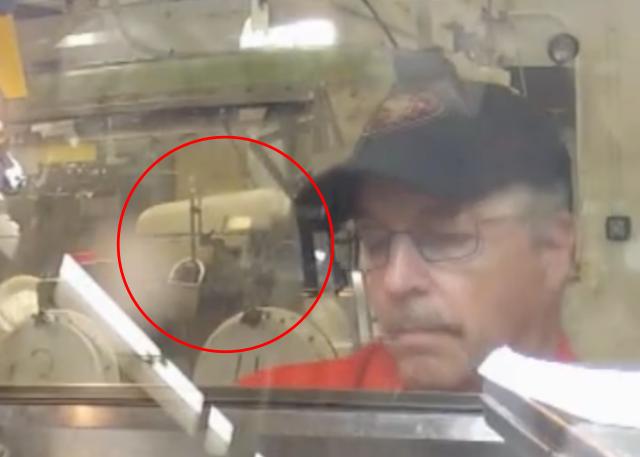
The background surprised me. That rounded shape looks very much like a Deckel FP1 toolroom milling machine.
The Hardinge is a natural choice – A compact, very precise machine, made in the USA.
Seeing a german made toolroom mill that differs very much from the common Bridgeport Layout of milling machines was unexpected.
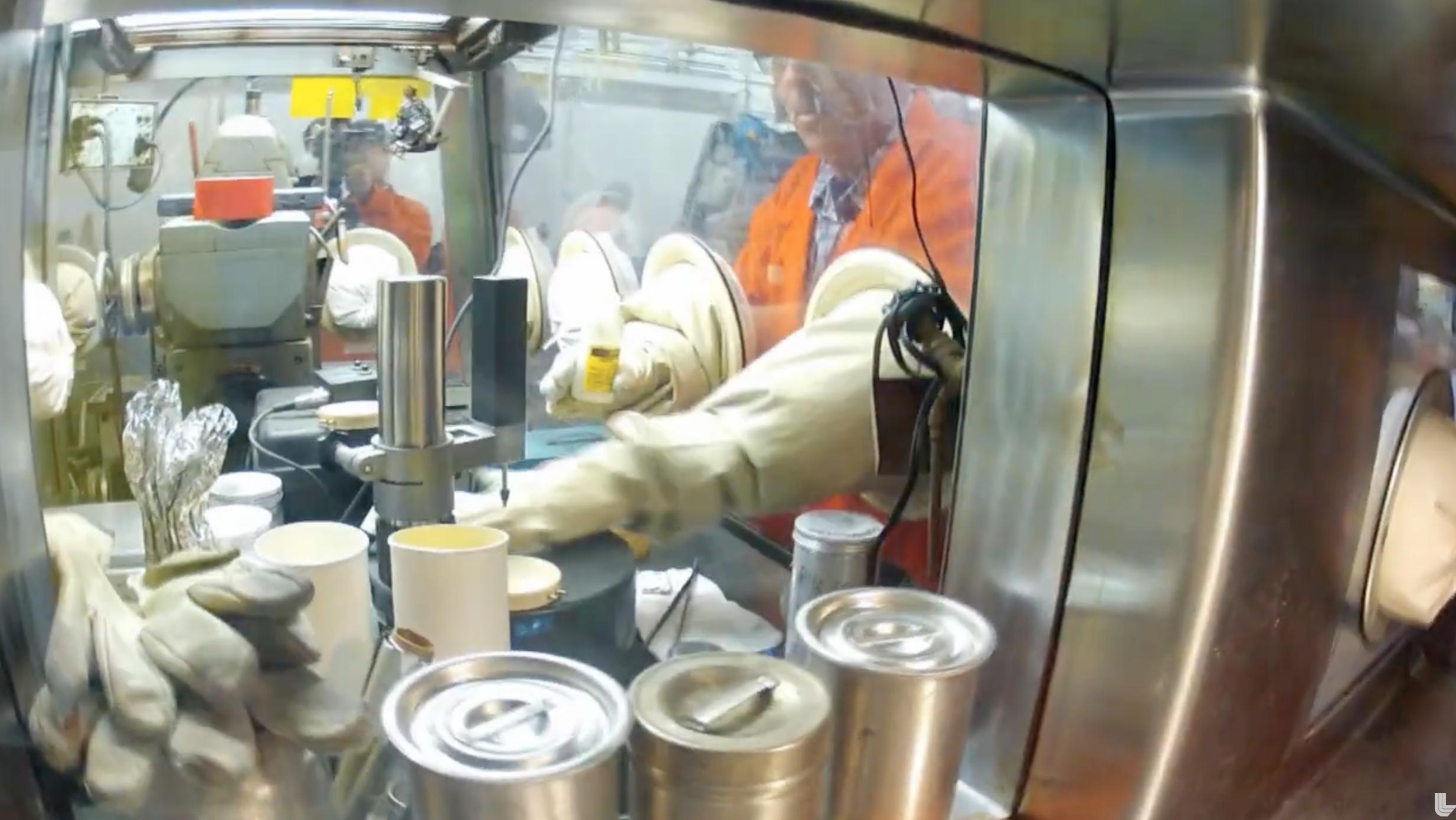
Another Screenshot shows what appears to be an inspection setup.
A Heidenhain length gage (METRO or similar) in its Stand can be seen. The control box for moving the probe tip up and down can be seen further back.
Also – The backside of the milling machine is in plain sight, with the very distinctive dovetail for the vertical head and the hand wheel to move the y-axis.
An overview of that certain glove box area – The FP1 in the right glovebox can be clearly seen, the 12mm square drive wrench thats used for the drawbar on its spot to be used as a quill lever.
According to the layout from the other photos, the left, long glovebox houses the Hardinge HLVH.
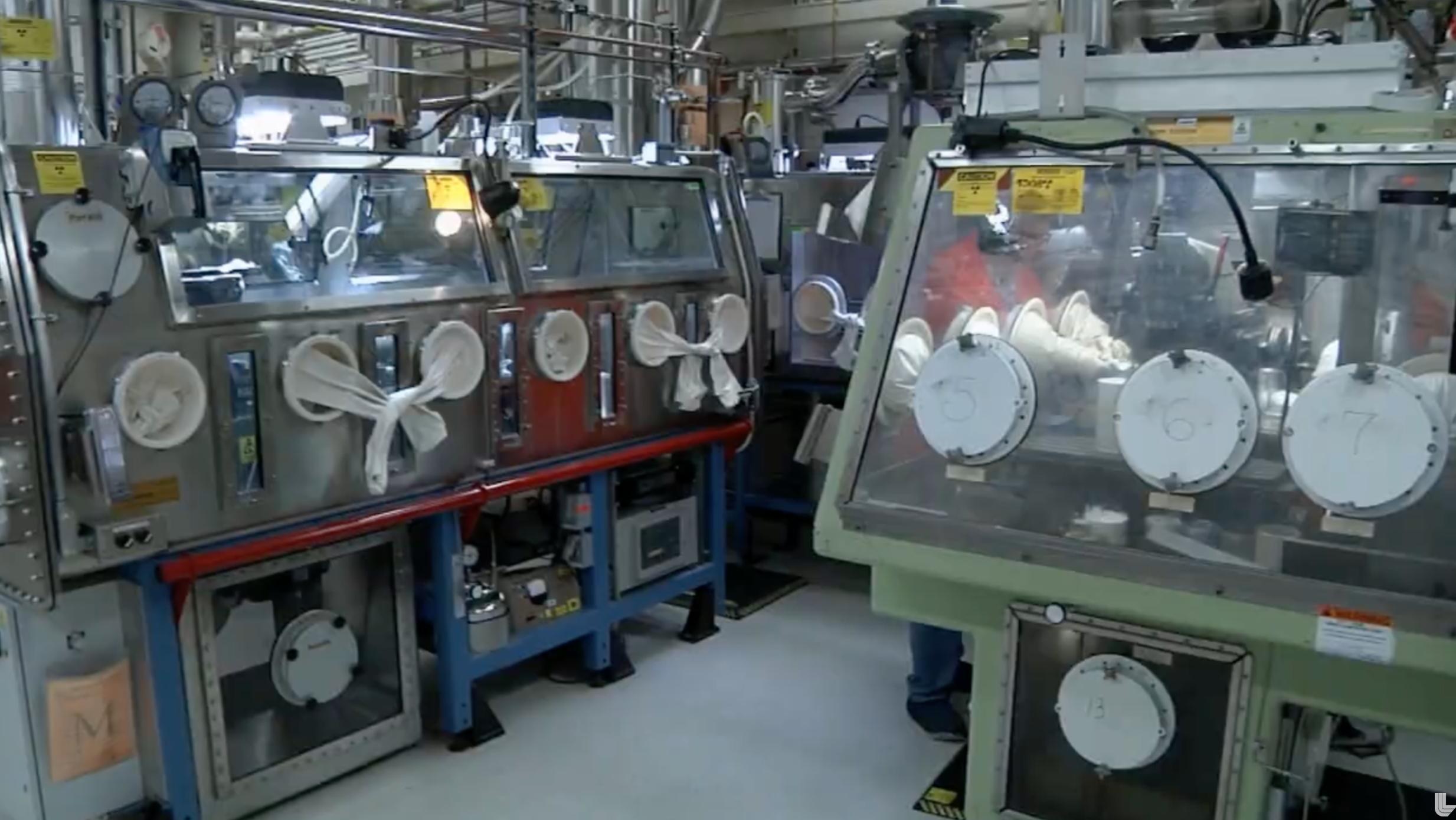
Same view of the glove box area but with a wider field of view:
Gorton Special Purpose Lathe
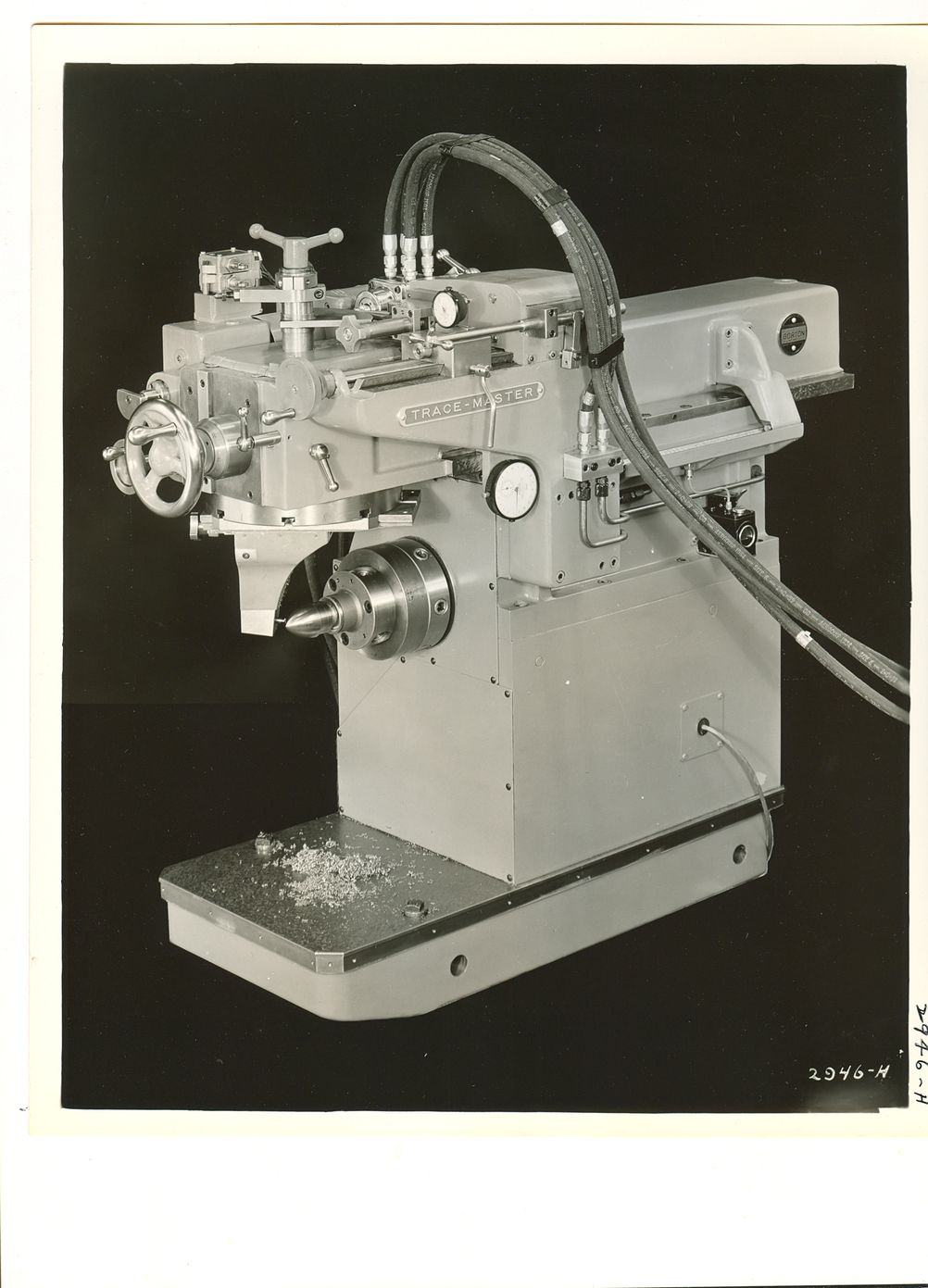
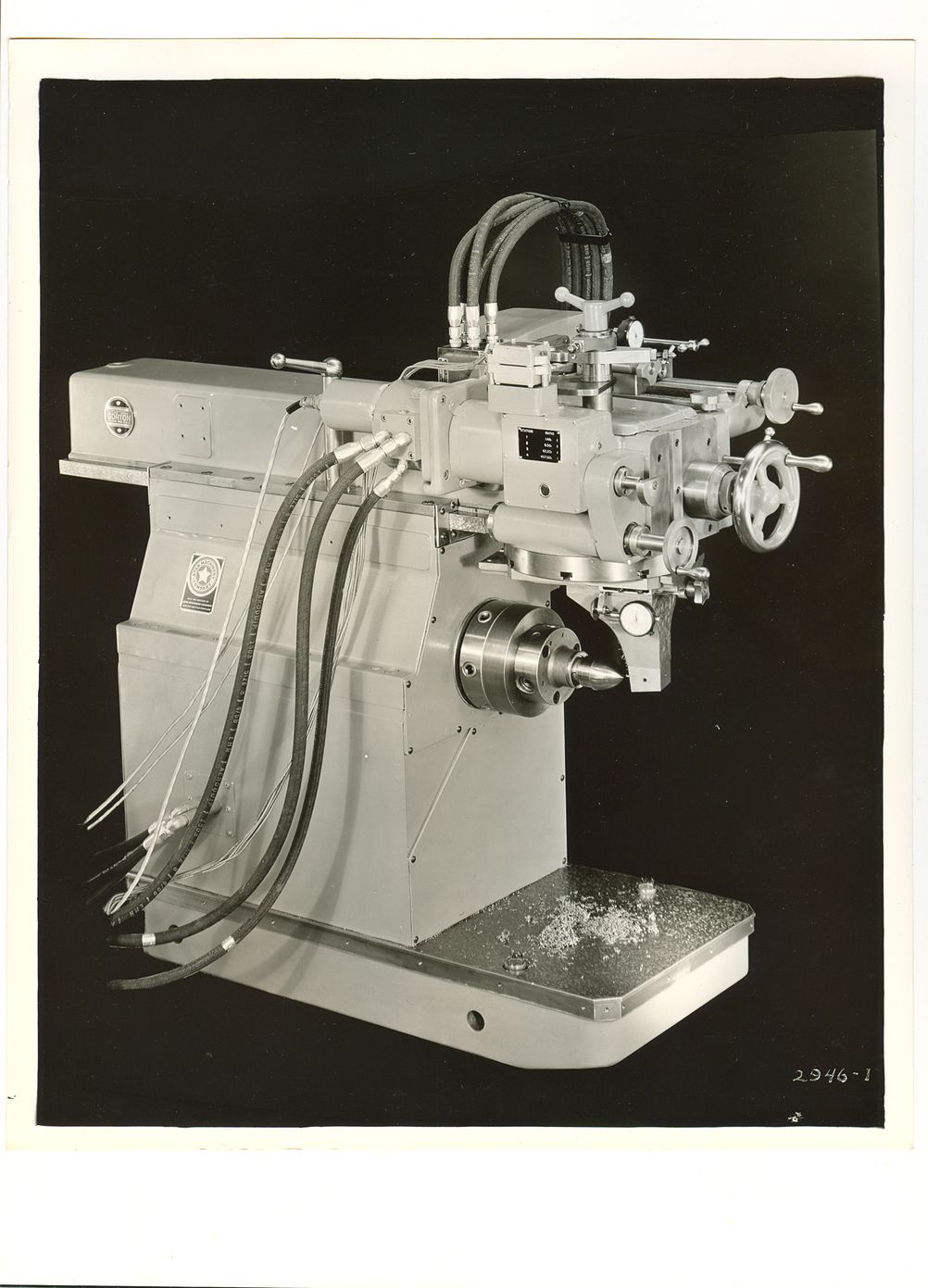
The general layout of these machines is very interesting - Its a headstock with a single linear axis that holds a combined rotary/linear axis on its end. I assume that layout was choosen to machine as perfect as a spherical contour as possible, similar to the Moore Aspheric Geneators (Moore Term for diamond turning lathes.)
Shortened Quote from gorton-machine.org
They were indeed used to machine Plutonium at the Hanford Nuclear weapons plant in Washington State.
...
The Gorton Lathes were used in pairs to produce a hollow half shell with two parts required per device assembly. One lathe was tooled to cut the outside profile, with the second tooled to cut the inside profile. Both operations were direct cutting off the spindle with no tailstock support. This introduced perhaps our most sensitive potential operating error with axial spindle growth from bearing heat-up greatly influencing the part contour. Thus, monitoring spindle-on time and temperature was a routine part of every production cycle. The containment glove boxes were temperature regulated, so this helped a bit. Even so, a high bearing temperature was indicative of emerging bearing failure. We had found that the Super Precision Timken “00” Grade bearings were very reliable but did need occasional replacement.
...
Weapons production was abruptly ceased at Hanford in 1966 due to international weapons treaties, but future uncompleted upgrades to the tracer lathes included tape drive control on the contouring and spindle replacement to a hydrostatic system. While I was in the research group in 1963, GE bought a custom made hydrostatic spindle direct from the Whiton Company to fit into one the early model Gorton Lathes. The special lathe that you describe as shipped in 1964 became the second of a research pair. These did indeed produce mirror surfaces from direct cutting without any polishing.
...
Please read the full text that was published on gorton-machine.org via Archive.org - The Original website has been taken off the internet.
"A pair of very high precision lathes"Moore T-Base Lathe
Article in "Nuclear Weapons Journal Issue 2, 2005" on a Moore T-Base Lathe - The article mentions only machining of Berylium for non-nuclear weapons components, but I think its still neat, so it gets a honorable mention here.
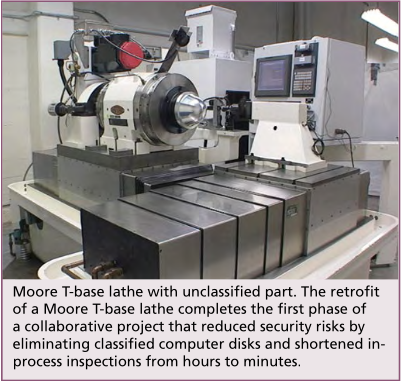
Full article, Page 25-27
https://www.loc.gov/pictures/resource/hhh.co0853.photos.316884p/?co=hh
More informations on the Moore T-Base lathe can be found on lathes.co.uk.
https://www.lathes.co.uk/moore/page6.html
Sources:
If somebody has better/more pictures that are freely availible or has informations that can be shared, I would love to add them to this article.
All images and assumptions are taken from the Stockpile Stewardship Video and a report from Lawrence Livermore National Laboratory regarding the Plutonium Facility.
Infos regarding the Gorton Lathe are taken from the now offline Website Gorton-Machine.org that can still be accessed trough archive.org
Stockpile Stewardship: How we ensure the nuclear deterrent without testing
Youtube
LAWRENCE LIVERMORE NATIONAL LABORATORY, PLUTONIUM FACILITY
https://enviroinfo.llnl.gov/sites/enviroinfo/files/2022-02/Building332_reduced.pdf
Gorton Machines – Special machines
https://web.archive.org/web/20230720134147/http://gorton-machine.org/machines/index.html#custom
Nuclear Weapons Journal Issue 2 2005
https://ufdcimages.uflib.ufl.edu/AA/00/04/05/84/00011/Issue%202-%202005.pdf
Moore T-Base Lathe
https://www.loc.gov/pictures/resource/hhh.co0853.photos.316884p/?co=hh
Heidenhain Length Gauges / Stands
https://www.heidenhain.com/fileadmin/pdf/en/01_Products/Prospekte/PR_Length_Gauges_ID208945_en.pdf